Historical Attraction
Royal Palace
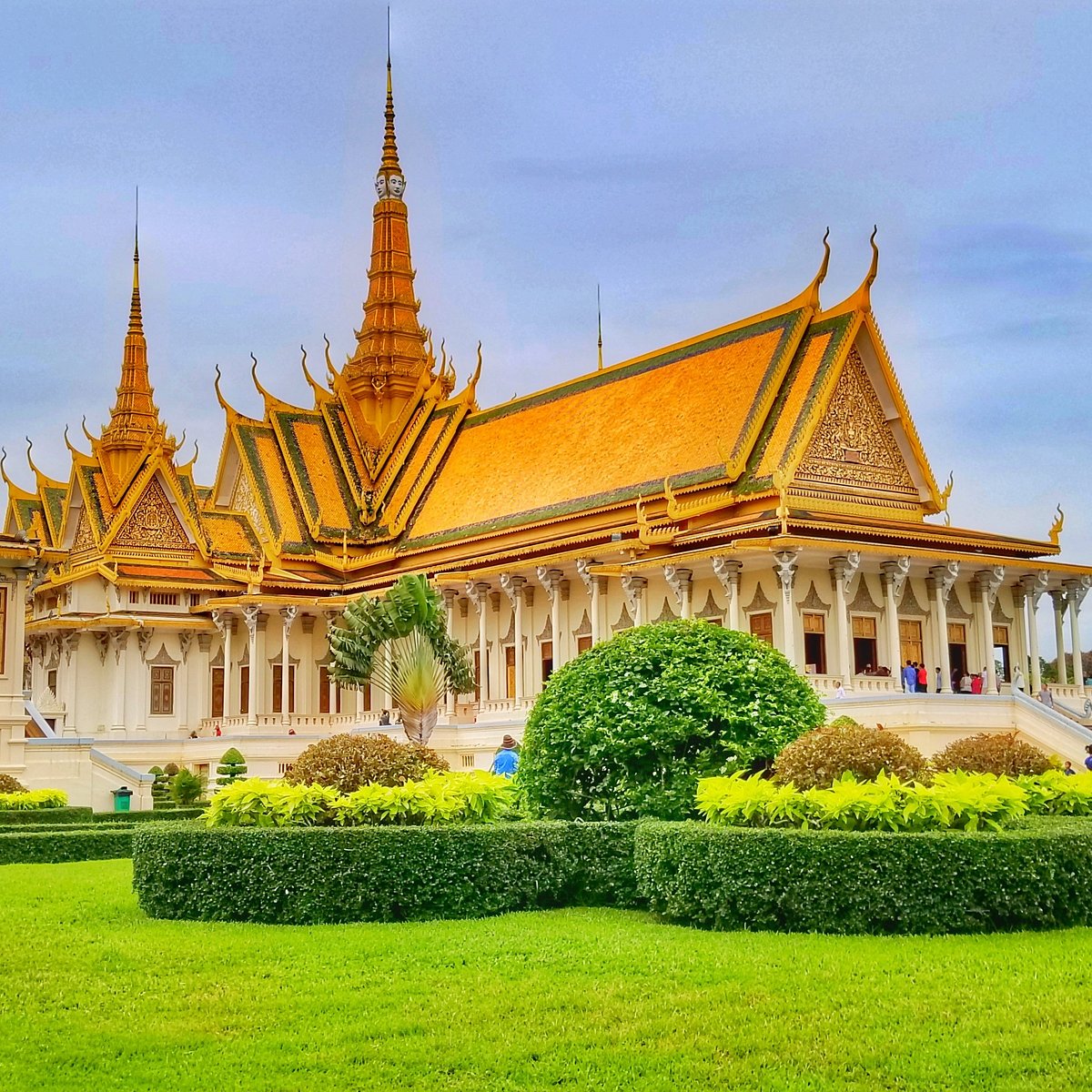 Phnom Penh’s Royal Palace is one of Cambodia’s most iconic and breathtaking landmarks, a must-visit for anyone
exploring the capital. Built in 1866, this stunning riverside complex has served as the royal residence
for generations and remains an active symbol of Cambodia’s monarchy.
Phnom Penh’s Royal Palace is one of Cambodia’s most iconic and breathtaking landmarks, a must-visit for anyone
exploring the capital. Built in 1866, this stunning riverside complex has served as the royal residence
for generations and remains an active symbol of Cambodia’s monarchy.
The palace blends traditional Khmer architecture with French influences, offering a glimpse into Cambodia’s
regal history and cultural resilience. Among the highlights is the Silver Pagoda, home to a life-sized gold
Buddha encrusted with diamonds and thousands of silver floor tiles (mostly covered for protection). The Throne
Hall, used for coronations and state ceremonies, impresses with its towering golden spire and French-painted
ceiling frescoes. Nearby, the Moonlight Pavilion offers a serene view from outside the palace, once hosting
royal dances and now used for ceremonies.
A unique sight is the Napoleon III Pavilion, an iron structure with European flair, believed to have been
gifted by France in the 19th century. The beautifully landscaped gardens and courtyards, with statues and
epic mural paintings from the Reamker (Cambodia’s version of the Ramayana), make wandering the grounds a
peaceful experience.
With its rich history, royal traditions, and stunning architecture, the Royal Palace is more than a tourist
attraction, it’s a cultural treasure. Whether you're a history buff, architecture lover, or curious traveler,
this is one Phnom Penh destination you won’t want to miss.
Cambodia's Temples
Angkor Wat
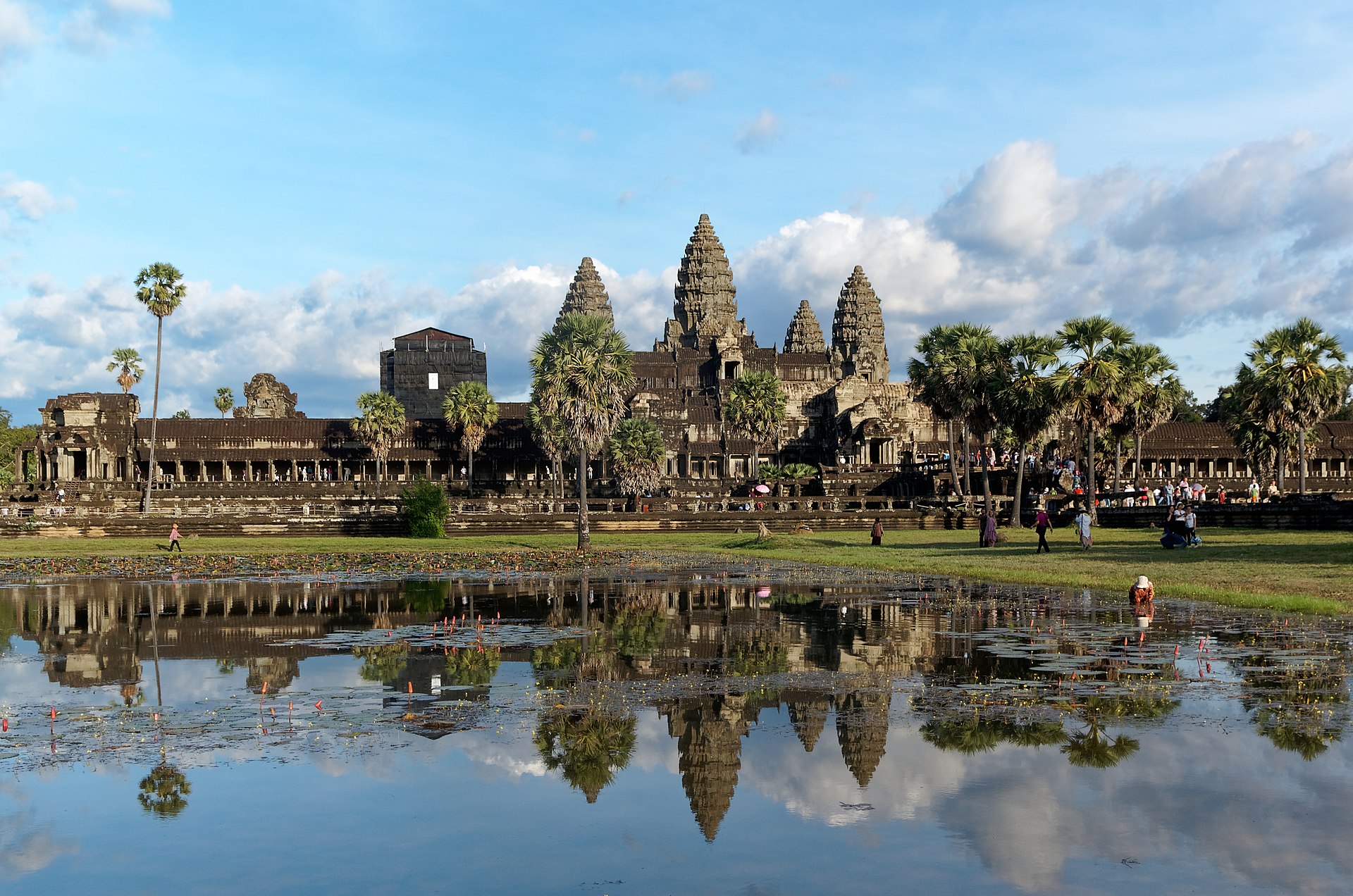 Angkor Wat isn’t just a temple, it’s a masterpiece of ancient architecture, a living symbol of Cambodian pride,
and one of the most awe-inspiring places on Earth. Built in the early 12th century by King Suryavarman II,
this incredible complex in Siem Reap was originally a Hindu temple dedicated to Vishnu but later transformed
into a Buddhist site, which it remains today.
Angkor Wat isn’t just a temple, it’s a masterpiece of ancient architecture, a living symbol of Cambodian pride,
and one of the most awe-inspiring places on Earth. Built in the early 12th century by King Suryavarman II,
this incredible complex in Siem Reap was originally a Hindu temple dedicated to Vishnu but later transformed
into a Buddhist site, which it remains today.
At first glance, Angkor Wat stuns with its sheer size. It’s the largest religious monument in the world,
covering more than 400 acres, and surrounded by a massive moat. But it’s the details that truly capture the
heart—miles of intricate carvings, over 2,000 celestial dancers carved into the stone walls, and massive towers
designed to represent Mount Meru, the mythical center of the universe.
The best time to visit is at sunrise, when the temple is bathed in a soft golden glow. You can also visit
at sunset for a similarly magical experience. Getting around is easy. Tuk-tuks, bicycles, or guided tours
from Siem Reap are all popular options. The nearby town offers budget to boutique accommodations, cheap
local food, and a laid-back vibe perfect for unwinding after a day of exploring.
Angkor Wat isn’t just an ancient site, it’s still a sacred space. Visitors are expected to dress respectfully
(shoulders and knees covered), avoid climbing on ruins, and treat monks and locals with kindness.
Whether you're a history buff, spiritual seeker, or just curious traveler, Angkor Wat offers a deeply moving
experience. It’s not just something to see, it’s something to feel.
other Temples
Angkor Thom
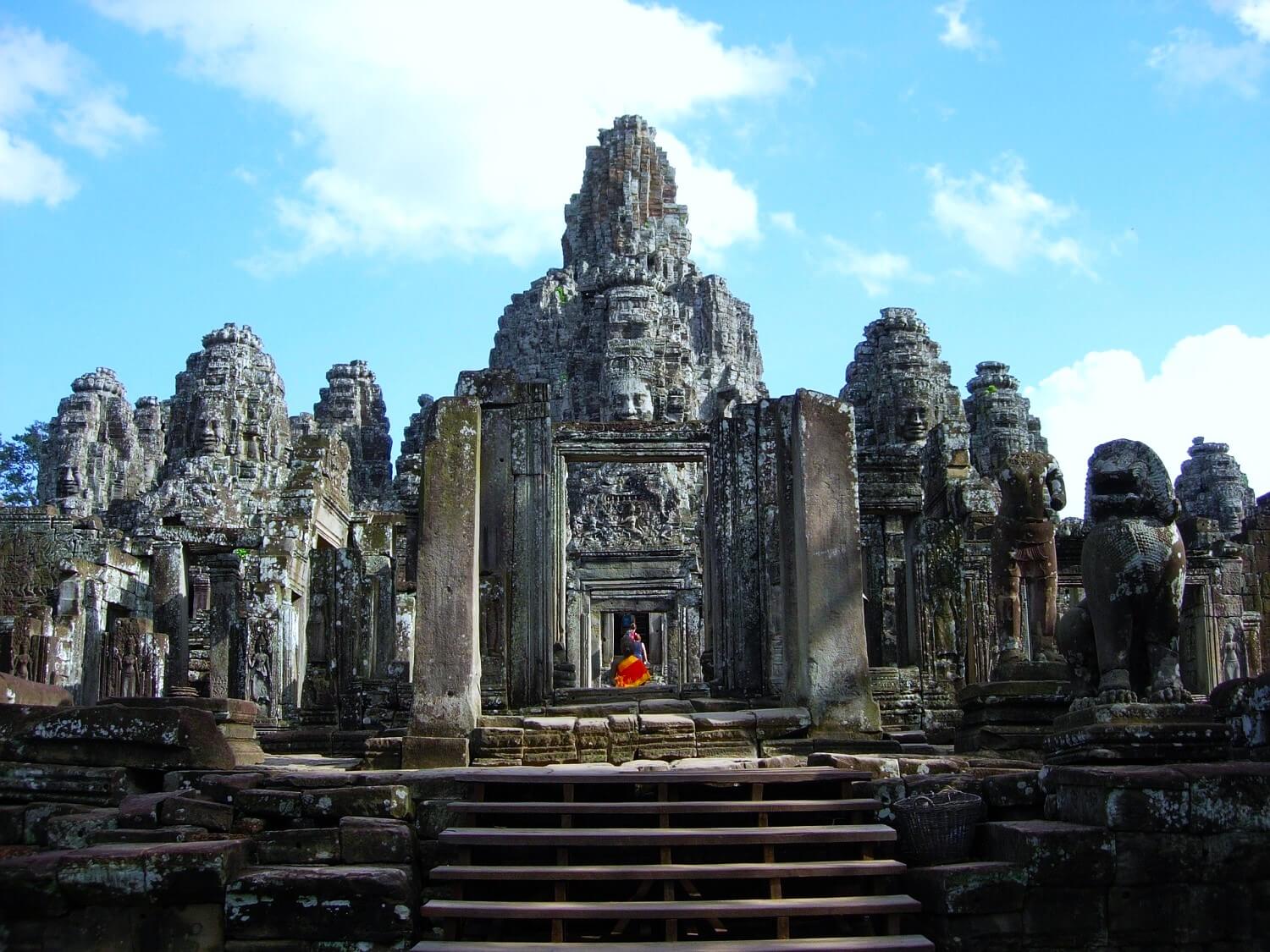 Nestled in the heart of Angkor Archaeological Park, Angkor Thom is a must-see gem in Siem Reap. Once the grand
capital of the Khmer Empire, this walled city stuns visitors with its massive gates, intricate carvings, and
sacred temples. Highlights include the smiling stone faces of Bayon Temple, the towering Baphuon, and the
beautifully carved Terrace of the Elephants. Built by King Jayavarman VII, Angkor Thom offers a unique glimpse
into Cambodia’s golden age. Don’t miss the chance to walk through its ancient gates and experience the history,
spirituality, and artistry that define this incredible site.
Nestled in the heart of Angkor Archaeological Park, Angkor Thom is a must-see gem in Siem Reap. Once the grand
capital of the Khmer Empire, this walled city stuns visitors with its massive gates, intricate carvings, and
sacred temples. Highlights include the smiling stone faces of Bayon Temple, the towering Baphuon, and the
beautifully carved Terrace of the Elephants. Built by King Jayavarman VII, Angkor Thom offers a unique glimpse
into Cambodia’s golden age. Don’t miss the chance to walk through its ancient gates and experience the history,
spirituality, and artistry that define this incredible site.
Ta prohm Temple
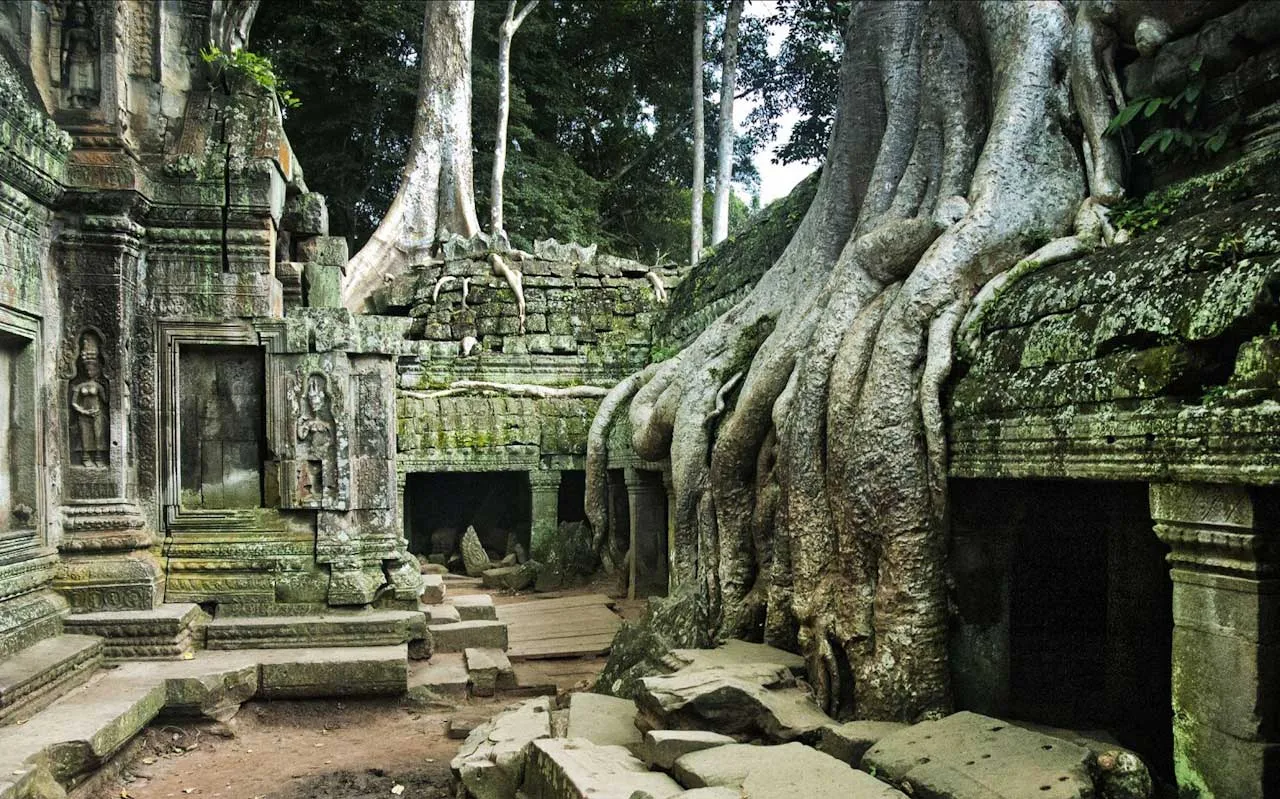 Wrapped in thick jungle roots and steeped in mystery, Ta Prohm is one of Angkor’s most iconic and atmospheric
temples. Famous for its appearance in Tomb Raider, this 12th-century temple blends history and nature in
haunting harmony. Massive tree roots snake over crumbling stone corridors, creating an unforgettable,
otherworldly scene. Built by King Jayavarman VII in honor of his mother, Ta Prohm once housed thousands
of attendants and dancers. Today, moss-covered carvings and towering trees tell the story of nature’s
slow reclaiming of the site. Best visited early in the day, Ta Prohm offers a truly magical experience
in Siem Reap.
Wrapped in thick jungle roots and steeped in mystery, Ta Prohm is one of Angkor’s most iconic and atmospheric
temples. Famous for its appearance in Tomb Raider, this 12th-century temple blends history and nature in
haunting harmony. Massive tree roots snake over crumbling stone corridors, creating an unforgettable,
otherworldly scene. Built by King Jayavarman VII in honor of his mother, Ta Prohm once housed thousands
of attendants and dancers. Today, moss-covered carvings and towering trees tell the story of nature’s
slow reclaiming of the site. Best visited early in the day, Ta Prohm offers a truly magical experience
in Siem Reap.
Banteay Srei Temple
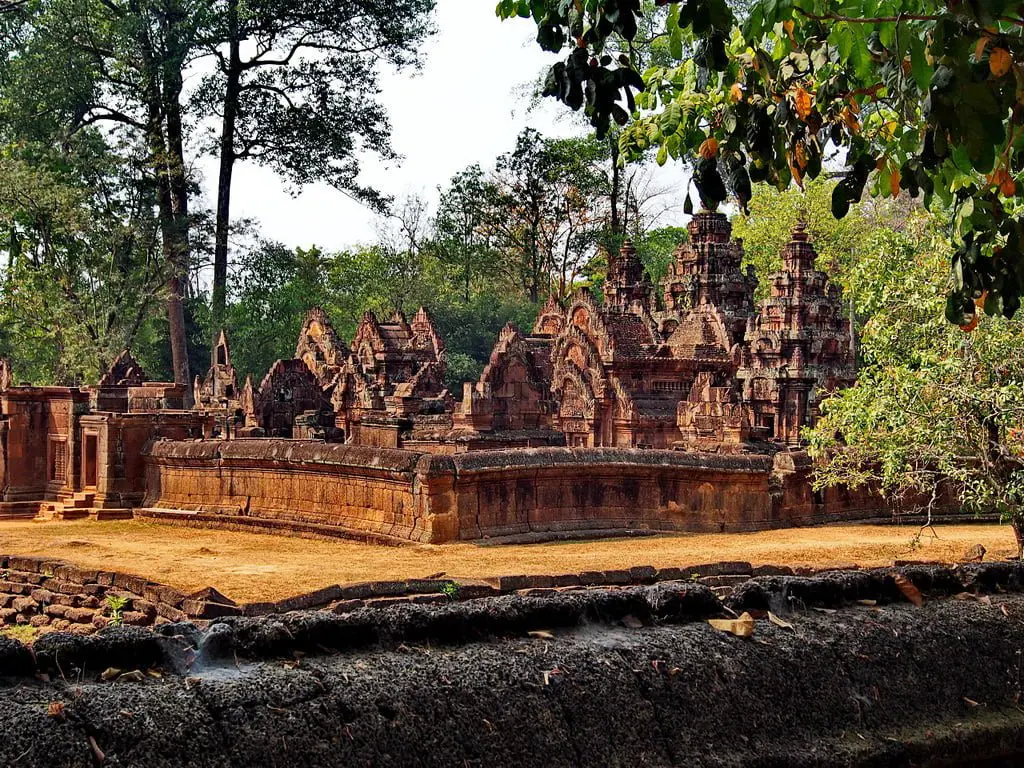 Carved from rosy sandstone and famed for its intricate detail, Banteay Srei is often called the “jewel of
Angkorian art.” Built in 967 CE and dedicated to the Hindu god Shiva, this small yet breathtaking temple
near Siem Reap is a masterpiece of fine stone carving. Its delicate, three-dimensional reliefs of divine
figures and mythological scenes showcase Khmer craftsmanship at its finest. Unlike other Angkor temples,
Banteay Srei was commissioned by a Brahman, not a king. With a well-preserved temple complex, nearby lotus
pond boat rides, and a modern visitor center, Banteay Srei is a must-see cultural gem in Cambodia.
Carved from rosy sandstone and famed for its intricate detail, Banteay Srei is often called the “jewel of
Angkorian art.” Built in 967 CE and dedicated to the Hindu god Shiva, this small yet breathtaking temple
near Siem Reap is a masterpiece of fine stone carving. Its delicate, three-dimensional reliefs of divine
figures and mythological scenes showcase Khmer craftsmanship at its finest. Unlike other Angkor temples,
Banteay Srei was commissioned by a Brahman, not a king. With a well-preserved temple complex, nearby lotus
pond boat rides, and a modern visitor center, Banteay Srei is a must-see cultural gem in Cambodia.
Preah Vihear Temple
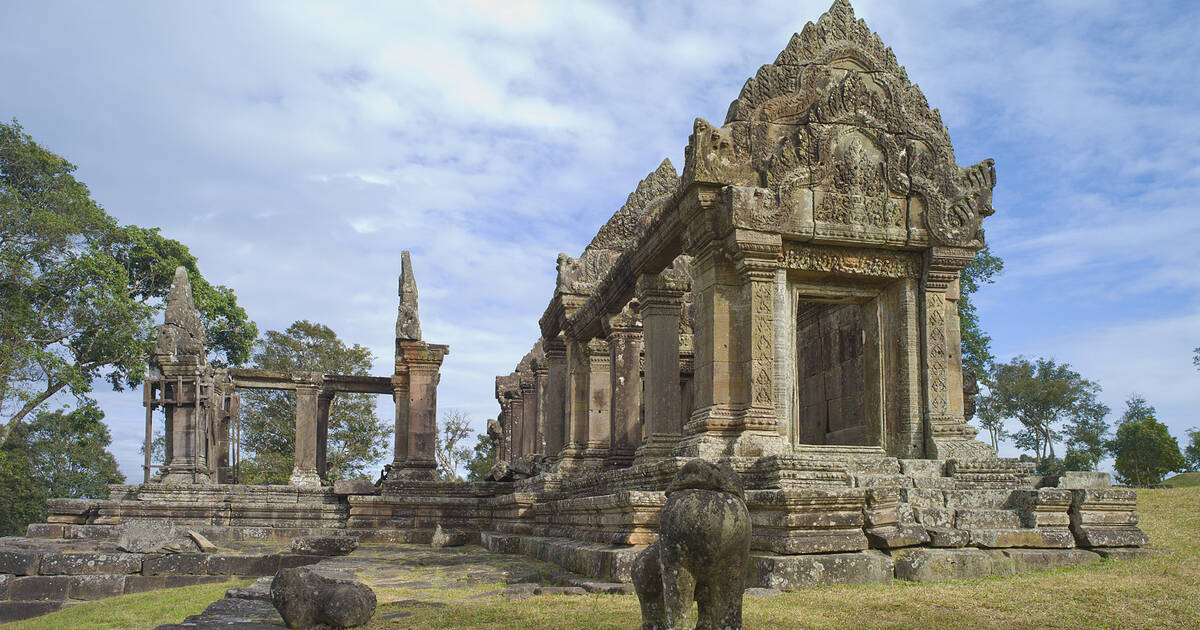 Perched dramatically atop a cliff on the Cambodian-Thai border, theTemple of Preah Vihear is a stunning
example of classical Khmer architecture. Dedicated to Shiva and dating back to the 11th century—with
roots reaching the 9th—this UNESCO World Heritage Site features a series of sanctuaries connected by
walkways and staircases stretching over 800 meters. Its remote location has helped preserve its intricate
stone carvings and spiritual atmosphere. Blending harmoniously with the natural landscape, Preah Vihear
offers not only historical significance but breathtaking views, making it a must-visit for those seeking
Cambodia’s cultural and architectural treasures.
Perched dramatically atop a cliff on the Cambodian-Thai border, theTemple of Preah Vihear is a stunning
example of classical Khmer architecture. Dedicated to Shiva and dating back to the 11th century—with
roots reaching the 9th—this UNESCO World Heritage Site features a series of sanctuaries connected by
walkways and staircases stretching over 800 meters. Its remote location has helped preserve its intricate
stone carvings and spiritual atmosphere. Blending harmoniously with the natural landscape, Preah Vihear
offers not only historical significance but breathtaking views, making it a must-visit for those seeking
Cambodia’s cultural and architectural treasures.
Toul Sleng Genocide Museum
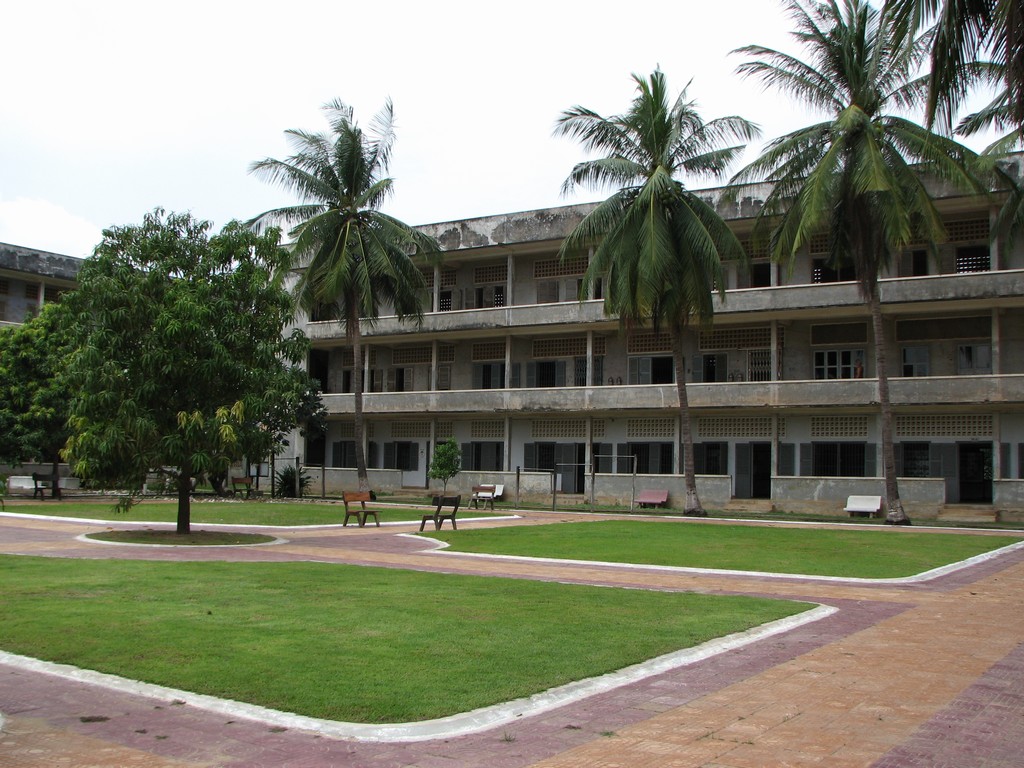 The Former M-13 prison, the Tuol Sleng Genocide Museum (S-21), and the Choeung Ek Genocidal Centre are deeply
connected sites that collectively represent the horrors committed during the Khmer Rouge regime in Cambodia
between 1975 and 1979. Each site played a specific role in the machinery of terror led by Pol Pot and his
inner circle, particularly the infamous commander Kaing Guek Eav, known as Duch. The M-13 prison, established
in the early 1970s in a remote area, served as a testing ground for methods of torture and interrogation.
It was here that Duch developed the brutal techniques that would later be used on a much larger scale.
The Former M-13 prison, the Tuol Sleng Genocide Museum (S-21), and the Choeung Ek Genocidal Centre are deeply
connected sites that collectively represent the horrors committed during the Khmer Rouge regime in Cambodia
between 1975 and 1979. Each site played a specific role in the machinery of terror led by Pol Pot and his
inner circle, particularly the infamous commander Kaing Guek Eav, known as Duch. The M-13 prison, established
in the early 1970s in a remote area, served as a testing ground for methods of torture and interrogation.
It was here that Duch developed the brutal techniques that would later be used on a much larger scale.
S-21, located in Phnom Penh, was transformed from a school into a high-security prison where more than 18,000
people were detained. Victims were accused of being enemies of the state, often without any real evidence.
They were subjected to horrific torture until they confessed to fabricated crimes. After interrogation, most
prisoners were sent to the Choeung Ek Genocidal Centre, one of the many killing fields across the country,
where they were executed and buried in mass graves.
These three sites form a chilling, linear narrative—from arrest and torture to execution—and serve as physical
evidence of the Khmer Rouge’s systematic plan to destroy Cambodian society. Today, they function as memorials
and educational centers, preserving the memory of the victims and teaching future generations about the
consequences of totalitarianism, dehumanization, and genocide. They also contribute to ongoing justice efforts,
such as the trials held by the Extraordinary Chambers in the Courts of Cambodia (ECCC). Together, the M-13
prison, S-21, and Choeung Ek stand not only as symbols of suffering but also as vital instruments for healing,
remembrance, and the promotion of human rights.